The Two Poles of Thinking about AI
Why Dismissing It Misses the Point (and So Does Blind Faith)
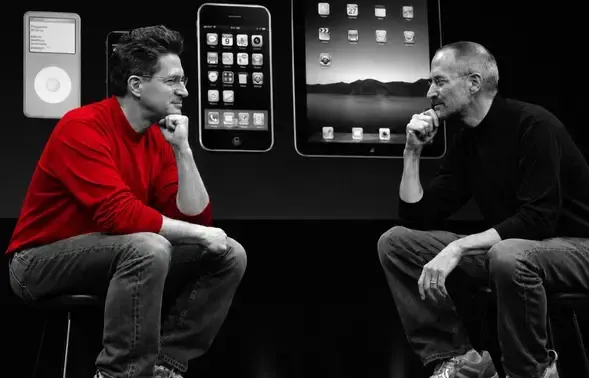
I find the attitude towards AI and AI-assisted work remarkably polarised.
I'll be honest with you - I'm fascinated by AI. I've shown AI outputs to many people over the past year, and I consistently get two types of responses.
There's the "Wow, that's amazing - tell me more about how you did that" crowd. Genuinely curious, leaning forward, wanting to understand the process. That is me generally.
Then there's the dismissive response: "Oh, so you just pressed a button and got AI to do that."
That second reaction interests me more than the first. Because underneath it lies a fundamental misunderstanding about how AI actually works - and what it takes to use it well.
The Button-Pressing Myth
The dismissive camp seems to believe AI does all the heavy lifting. You type a prompt or two, press enter, and out comes the finished product with little or no input from the user. They treat it like a vending machine. Insert request, receive output.
Some seem genuinely suspicious. They assume the options are already there - a template thing, as if AI came up with all the ideas beforehand and just moulds them for your request. There's often an underlying anxiety too. A sense that AI will take over, that it cheapens real work, that it's somehow cheating.
What they don't realise is that it still takes significant strategic thought from the user. The right questions. The right context. And critically - the idea to do it in the first place.
AI doesn't replace thinking. It amplifies it.
A Lesson from the Photography Club
This reminds me of something I experienced years ago when I started at a photography club.
I began with slide film, like everyone else. It was the trusted technology - been around for decades, reliable, proven. Then digital cameras came along, specifically the digital SLR. Photography club standard, so to speak.
At first, digital was frowned upon. Now you could take as many photos as you liked without the cost of developing. You could see your shots instantly. You could edit on a PC. It seemed like an unfair advantage - too good to be true. It challenged the established way of doing things.
The club split into two camps. Sound familiar?
What the challengers didn't realise was that all those advantages came with new challenges. You could take more pictures, but then you had to organise and sort through hundreds to find the best one. You could edit photos, but you had to learn Photoshop or Lightroom and go through months of trial and error to develop any real skill. You could shoot without limit, but that freedom demanded new discipline.
Another set of skills emerged. A different craft developed. But at the end of the day, digital gave you more options and more opportunity - if you were willing to put in the work to master it. It
AI Is the Same - But Amplified
The same is true with AI, albeit amplified and applied to far more areas of work.
It takes more skills, more know-how, and more discipline to get genuinely good results. You need to understand what AI can and can't do. You need to frame your questions properly. You need to know when to push back on outputs and when to refine your approach. You need a system that's sustainable, not just impressive for one demo.
Technology makes things faster - but it doesn't make them easier. Not if you want quality, relevance and scalability.
Here's what I've learned from working with AI across sales and marketing projects: the best outputs come from the best inputs. That means clarity on your strategy, your audience, your positioning. It means understanding the context deeply enough to guide the AI properly - your tailored sales and marketing strategy.
You can't shortcut thinking. You can only accelerate its execution.
The Blind Faith Problem
But on the polar opposite the dismissive crowd aren't entirely wrong to be cautious. There's another camp I haven't mentioned yet: the blind faith adopters.
These are the people who trust AI outputs without question. They copy, paste, and publish without proofing. They accept the first response as gospel. They stop thinking because the machine has thought for them.
This is just as problematic as dismissing AI entirely - perhaps more so.
The research backs this up. A landmark study from Harvard Business School and Boston Consulting Group found that consultants using AI for tasks outside its capabilities were 19% less likely to produce correct solutions compared to those working without AI. The researchers described how users essentially "switch off their brains" and outsource their judgment - what Harvard's Fabrizio Dell'Acqua termed falling asleep at the wheel. In a related study, Dell'Acqua found that recruiters using high-quality AI became lazy, careless, and less skilled in their own judgment - ultimately missing brilliant applicants and making worse decisions than those using no AI at all. (Big Think)
More recently, the MIT Media Lab's "Your Brain on ChatGPT" study used EEG monitoring to measure brain activity during writing tasks. The findings were stark: participants using ChatGPT showed the weakest neural connectivity, while those writing without AI exhibited the strongest, most distributed brain networks. Perhaps most concerning, when ChatGPT users were later asked to write without AI assistance, they showed reduced brain engagement - suggesting a form of cognitive debt that accumulates with sustained AI reliance.
AI makes mistakes. It hallucinates facts. It misses context. It can produce plausible-sounding nonsense that slips past you if you're not paying attention. I've seen it confidently cite statistics that don't exist and reference companies that were never founded.
Blind faith leads to laziness. And laziness leads to costly mistakes - a client presentation with fabricated data, a blog post with incorrect claims, a strategy built on assumptions the AI invented.
The real skill isn't trusting AI or distrusting it. It's knowing when to lean on it and when to push back. It's treating AI as a capable colleague who needs supervision, not an oracle that delivers truth.
Question the outputs. Check the facts. Apply your own judgement. That's not slowing the process down - it's the process working properly.
The Opportunity for Those Willing to Invest
For SME owners, particularly in technical and engineering sectors, this matters.
AI isn't a silver bullet. It won't fix broken processes or unclear positioning. If your sales and marketing lacks direction, AI will just help you produce scattered content faster. That's not progress - it's accelerated chaos.
But if you've done the work - if you have a clear strategy, defined your audience, built your value proposition - then AI becomes a genuine multiplier. You can do more with less. You can test ideas faster. You can maintain consistent activity without burning out your team.
Our survey at the Advanced Engineering Show found that 66% of engineering companies used AI when creating their marketing strategy - but primarily for basic text generation, not strategic research or competitive analysis. (SME Engineering Survey Report)
That tells me most companies are only scratching the surface. They're using AI as a word processor with extra features, not as a strategic tool. The opportunity lies in going deeper.
Beyond the Polarised Debate
I'm not suggesting everyone needs to become an AI enthusiast. Healthy scepticism has value. But dismissing AI as "just pressing buttons" misses something important about the future of work.
Every major technology shift has created winners and losers. The winners aren't usually the early adopters who jumped in without strategy. They're the ones who understood the tool well enough to use it systematically - who built new disciplines around new capabilities.
Photography clubs eventually stopped arguing about film versus digital and realised it was all about the image!
The craft evolved. The standards evolved. The skilled photographers remained skilled - they just had different tools.
AI in sales and marketing will follow the same pattern. The question isn't whether to use it. It's whether you'll invest the time and strategic thought to use it properly.
For engineering and technical SMEs, that investment could be the difference between consistent growth and another year of random activity producing random results.
PS The image above is genuinely mine - taken on the east coast of the North Island at the Mangawhai Heads in New Zealand - with my phone. It took about 7 pictures to get the right pic by the way. It’s amazing what technology we now have in our pockets and can take better pics in some instances than my digital SLR!
Written By Stefan Buss