The AEO and GEO Hype: Why Good SEO Still Wins
7 Search Myths around AEO and GEO and how relevant SEO is still
Every week I see a new acronym and a new agency pitch. AEO. GEO. LLMO and see them over hyped. The message is always the same - SEO is dead, AI has changed everything, and if you're not paying someone to optimise for ChatGPT you're already behind. Meanwhile, most SMEs are sitting on websites that don't rank, don't convert, and don't have the basics right. The hype is dangerous because it pulls budget away from what actually works.
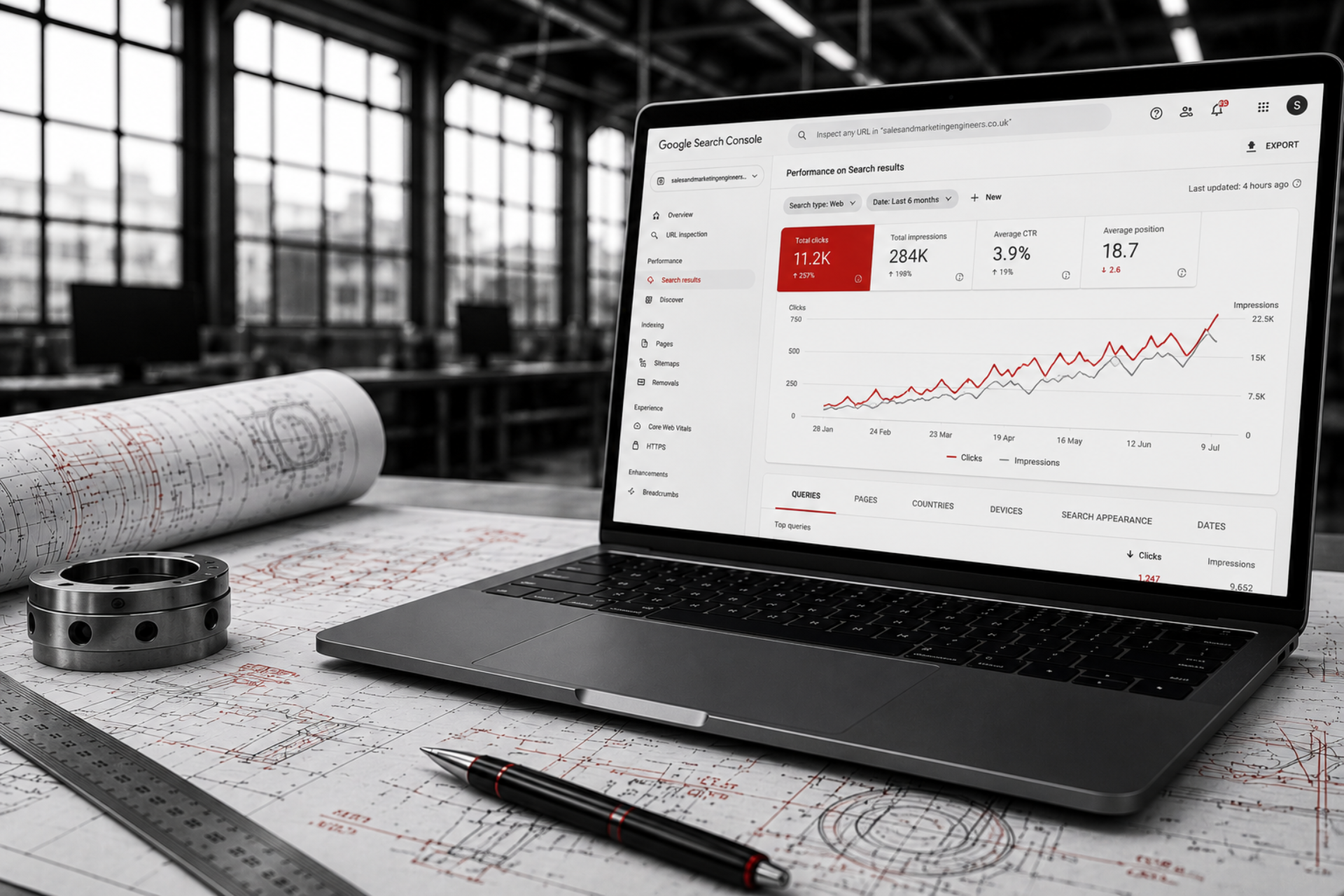
The reality is straightforward. Traditional SEO, done well, is still the single biggest driver of qualified traffic for small and medium businesses. Google itself has said there are no special optimisations required to appear in AI Overviews or AI Mode - the same SEO fundamentals apply. We have seen websites grow traffic by over 10x in recent months simply by getting the basics right - fresh content, real expertise on the page, and proper technical foundations. AI search is real and it's growing fast, but it's still under 1% of referral traffic for most businesses. The question is not "SEO or AEO." The question is how to build one modern search programme that serves both.
With this article I wanted to cut through the myths, showing what the research actually says, and gives you a clear view of where to focus your budget over the next twelve months.
Strategic Briefing (In short)
SEO has always been changing - The shift to AI is just the latest in a 15-year chain of algorithm updates, not a sudden rupture.
SEO is not dead - Traditional organic search still drives the vast majority of qualified website traffic for SMEs and it is not falling off a cliff
AEO and GEO are mostly SEO with AI rebranded - The same fundamentals apply, with small adjustments for how AI systems extract and cite content.
AI search is small but high-intent - AI referrals convert 42% better than non-AI traffic, so you need to be visible even if volume is low.
Show real Experience, Expertise, Authority and Trust - Optimising your content to demonstrate genuine experience, expertise, authority and trust is now far more important than chasing keywords. This is what actually delivers 10x traffic gains.
One programme, many surfaces - Build a single modern search programme that makes your content rank, get cited by AI, and show up everywhere your buyers search.
Save this guide for later
Get the full guide delivered to your inbox - a practical reference for planning your SEO, AEO and GEO
approach over the next 12 months.
Quick Links
- The Three-Letter Problem: What SEO, AEO and GEO Actually Mean
- Myth 1: SEO Has Suddenly Changed Because of AI
- Myth 2: AI Search is a Brand-New Way of Searching
- Myth 3: SEO is Dead - AI Has Killed Search
- Myth 4: AEO and GEO Need Separate Budgets and Specialists
- Myth 5: You Need AI Optimisation Before Fixing Your SEO
- Myth 6: If You Appear in AI Overviews You'll Lose All Your Traffic
- Myth 7: You Can't Measure AI Visibility
- The New SEO: Search Everywhere Optimisation
- What SMEs Should Actually Focus On
- The 12-Month Plan: Where to Invest Your Budget
The Three-Letter Problem: What SEO, AEO and GEO Actually Mean
Before we dismantle the myths, let's get the definitions straight. There's a lot of deliberate confusion in the market because confusion sells services.
SEO (Search Engine Optimisation) is the discipline of getting your website to rank in traditional search results - Google, Bing, and other search engines. It covers technical health, content quality, user experience, and authority signals.
AEO (Answer Engine Optimisation) is the newer term for optimising content so it appears as the answer in AI-generated responses - Google's AI Overviews, Bing's Copilot, Perplexity, and others. In practice, it overlaps almost entirely with good SEO.
What is Answer Engine Optimisation (AEO)?
AEO is the practice of optimising content to appear as the direct answer in AI-generated search results, including Google's AI Overviews, Bing Copilot, and Perplexity. It focuses on clear question-and-answer structure, factual accuracy, and content that AI systems can easily extract and cite. In practice, AEO overlaps heavily with good SEO fundamentals.
GEO (Generative Engine Optimisation) is optimising for generative AI platforms like ChatGPT, Claude, and Gemini - where your content might be cited or referenced in a direct answer. This is where the most genuine differences emerge, but even here, the foundations are still standard SEO.
What is Generative Engine Optimisation (GEO)?
GEO is optimising content to be cited or referenced by generative AI platforms like ChatGPT, Claude, and Gemini when they answer user questions. Research shows that adding citations, quotations, and statistics to content improves GEO visibility by up to 40%. GEO builds on SEO foundations rather than replacing them.
All three disciplines are trying to answer the same question: how do I make my content visible when someone is searching for what I sell? The answer, in 2026, is largely the same answer it was in 2016 - publish genuinely useful, evidence-backed content on a technically sound website with clear authority signals.
Myth 1: SEO Has Suddenly Changed Because of AI
This myth is everywhere right now. The idea that AI has created some sudden, dramatic rupture in how search works - and that everything we knew about SEO has been thrown out.
Reality: SEO has been changing constantly for over 15 years. AI is just the latest chapter in a very long story of evolution. Look at the Wikipedia timeline of Google Search and you'll see dozens of major algorithm updates that each caused panic at the time - Panda, Penguin, Venice, Pirate, Exact Match Domain, Hummingbird, Pigeon, Mobilegeddon, RankBrain, Possum, Fred, Medic, BERT, Page Experience, MUM, the Helpful Content Update, and countless core updates since.
Each of these triggered the same headlines - "SEO is dead," "everything has changed," "the rules have been rewritten." And each time, the businesses that stayed focused on the fundamentals - good content, technical health, genuine authority - came out ahead. The underlying principle has been remarkably consistent since Panda in 2011: reward genuinely helpful content on trustworthy websites, and downgrade thin, manipulative, or spammy content.
AI Overviews and AI Mode are significant shifts, but they sit on top of that same principle. Google has confirmed the same SEO best practices still apply - there are no new magical optimisations required. What's actually new is the interface people see their answers through, not the fundamentals of what Google rewards.
The View From the Workshop: I've watched this pattern for 20 years. Every major update - BERT in 2019, Mobilegeddon in 2015, Panda in 2011, even Florida way back in 2003 - was declared the end of SEO. What actually happened each time is that lazy tactics stopped working, and well-built sites kept winning. Think of it like a factory floor. Every few years, a new piece of equipment comes in, the rules around safety and efficiency get tightened, and a few businesses still running on twenty-year-old kit fall behind. The well-maintained operations adapt and keep producing. The bar has been raised - and that's actually good news for businesses with real expertise to share.
What are Google AI Overviews?
AI Overviews are AI-generated summary answers that appear at the top of Google search results, powered by Google's Gemini model. Launched in May 2024, they synthesise information from top-ranking pages into a single answer with linked sources. They appear above the traditional blue-link results rather than replacing them, and users can still scroll past to see standard search listings.
Why this myth persists:
"Everything has changed" is a more compelling headline than "things are evolving as they always have." It also justifies panic-buying new services.
Myth 2: AI Search is a Brand-New Way of Searching
The current narrative is that AI has finally made search "intelligent" - that ChatGPT and AI Overviews are doing something completely new by understanding full questions instead of just keywords.
Reality: Google has been building this capability for over a decade. The shift from keyword-matching to genuine language understanding didn't start with ChatGPT - it started in 2012 with the Knowledge Graph, when Google announced the move from "things, not strings". That was the foundation of semantic search - associating words and concepts with each other, so a query about "the leader of the country with the Eiffel Tower" could be understood as a question about France's president, not a string of keywords to match.
In 2013, Google rolled this thinking deeper into the core algorithm with Hummingbird, which optimised search for full questions and conversational queries rather than just keyword matching. Before Hummingbird, long-tail questions often returned poor results because Google was looking for exact keyword matches. After Hummingbird, the search engine could understand intent, context, and the relationships between concepts.
Then came RankBrain in 2015 - Google's first machine-learning ranking system, which interpreted unfamiliar queries by understanding their meaning. Then BERT in 2019, which used transformer-based natural language processing - the same family of models that power ChatGPT and Gemini today. Then MUM in 2021, multimodal and 1,000 times more powerful than BERT.
In other words, "AI search" is not new. Google has been quietly running large language model thinking through search results for years. What's new is that AI is now visible to the user in a chat-style interface, rather than working invisibly behind the blue links. The underlying behaviour - search engines understanding meaning rather than matching keywords - has been the direction of travel for over 13 years.
Why this myth persists:
ChatGPT made AI feel sudden and visible. But the search infrastructure that powers AI Overviews has been quietly evolving since 2012. Businesses that have been writing for meaning and context rather than keyword density already had a head start - they just didn't know what to call it.
What is semantic search?
Semantic search is a method of finding information based on the meaning and intent behind a query, rather than matching exact keywords. Google introduced semantic search in 2012 with the Knowledge Graph, allowing it to understand relationships between concepts, people, places, and things. It is the foundation that makes modern AI-driven search possible.
Myth 3: SEO is Dead - AI Has Killed Search
This is the loudest myth and the most wrong. Every LinkedIn post claiming "SEO is over" is either selling a replacement or hasn't looked at the data.
Reality: Traditional search is still the dominant driver of website traffic by an enormous margin. Similarweb data shows Google Search drove 191 billion referrals in a single month, versus 1.13 billion from all AI platforms combined. BrightEdge's 2025 analysis found AI search accounted for less than 1% of referral traffic, while organic search remained the primary driver for most businesses.
More importantly for SMEs - good SEO still produces dramatic results. We have personally grown our own website traffic at Sales and Marketing Engineers grow by over 10x (round 11x actually) in recent months , driven by nothing more exotic than solid Experience, Expertise, Authority and Trust signals, technically sound pages, and genuinely fresh, useful content. No special AEO tricks. No GEO magic - only minor tweaks. Just the fundamentals, done properly.
This is where E-E-A-T comes in. Google originally introduced this as E-A-T - Expertise, Authoritativeness and Trust - as part of its quality rater guidelines, and then in December 2022 added an extra E for Experience, making it E-E-A-T. The addition of "Experience" was a quiet but significant shift. Google now wants evidence that whoever wrote the content has actually done the thing they're writing about - not just researched it.
From the Field: I had a client convinced their SEO was "finished" because of AI Overviews. We did a technical audit, fixed the parts of the website that were jamming up search engines, added the right structured data, rewrote their cornerstone pages with real first-hand expertise and case studies, and published fresh content weekly against their core commercial keywords. Within four months their organic traffic was up 10x and their enquiries had tripled. SEO isn't dead - neglected SEO is dead.
What is E-E-A-T?
E-E-A-T stands for Experience, Expertise, Authoritativeness, and Trustworthiness. It's Google's framework for evaluating content quality, originally introduced as E-A-T and updated to E-E-A-T in December 2022 to add an emphasis on first-hand experience. For SMEs this means showing real case studies, named authors with credentials, specific knowledge, and clear company information - the opposite of generic AI-generated filler.
Why this myth persists:
AI feels new and exciting. "SEO is dead" is a more clickable headline than "SEO still works if you do it properly." Agencies selling AEO/GEO services have a commercial incentive to make you think the rulebook has changed. It mostly hasn't.
Myth 4: AEO and GEO Need Separate Budgets and Specialists
This is where the hype becomes expensive. Multiple agencies now sell AEO and GEO as separate services on top of SEO, often for considerable monthly fees.
Reality: Google has stated directly that no additional requirements or special optimisations are needed to appear in AI Overviews or AI Mode - standard SEO best practices still apply. To be cited by an AI system, your page still needs to be crawled, indexed, and eligible to appear in normal search results. If the SEO foundations are broken, no amount of AEO optimisation will help.
The academic research backs this up. The foundational GEO paper found that what actually improves visibility in generative engines is adding citations, quotations, and statistics to your content - boosting visibility by up to 40% - while keyword stuffing did almost nothing. That's not a new discipline. That's just writing better, more evidence-backed content, which is what good SEO has always rewarded.
Why this myth persists:
Specialists sell specialisms. If an agency can convince you that AEO is a separate field requiring separate expertise, they can sell you a separate retainer. For the vast majority of SMEs, the right answer is one modern SEO programme that happens to include AI considerations - not three separate services stacked on top of each other.
Myth 5: You Need AI Optimisation Before Fixing Your SEO
This is the mistake that costs SMEs the most money. They see the AI hype, panic, and start paying for advanced optimisation before the basics are in place.
Reality: AI systems cannot cite a page that isn't indexed. They cannot extract an answer from content that doesn't exist. They cannot trust a domain with no authority signals. Getting the foundations right is not optional - it's a prerequisite.
For most SMEs, the practical priority list looks like this:
- Fix technical SEO - site speed, crawlability, indexation, mobile
- Add structured data (schema) so search engines and AI know what each page is
- Build out cornerstone pages for each core service
- Establish E-E-A-T through named authors, case studies, and credentials
- Publish fresh, evidence-backed content with real references
- Develop content rich in the topics, products and concepts you want to be known for
- Earn genuine backlinks through expertise and PR
- Make content answer-ready with clear structure
What is schema markup?
Schema markup is structured code added to a website that tells search engines and AI systems exactly what your content means - for example, identifying a page as a product, article, FAQ, review, or local business. It helps search engines display rich results, improves how AI systems extract and cite your content, and is a key technical layer for both traditional SEO and AEO.
Only once those are in place does it make sense to think about finer AI-specific optimisations - which in practice mostly means making your content easier for AI systems to extract and cite. That's a small adjustment on top of good SEO, not a separate programme.
The View From the Workshop: Think of it like commissioning a production line. You wouldn't bolt advanced automation onto a line where the conveyor keeps jamming and the inspection station is broken. You'd fix the foundations first, then optimise. SEO works the same way. Get the base system reliable, then refine for the new channels on top.
Not sure if your SEO foundations are strong enough to support AI search visibility?
Book a free SEO audit and we'll stress-test your current setup - technical health, content quality, structured data, expertise signals, and AI readiness. You'll get a clear priority list of what's working, what's broken, and what to fix first.
Myth 6: If You Appear in AI Overviews You'll Lose All Your Traffic
This is the "zero-click" panic. The idea that AI Overviews will answer everything and nobody will ever click through to your site again.
Reality: The data shows a more nuanced picture. Pew Research found users clicked a traditional result in 8% of searches where an AI summary appeared, compared to 15% when no AI summary appeared - so clicks do drop, but they don't disappear. Meanwhile, only about 1% of users click a link inside the AI summary itself.
That sounds bad until you look at the other side. Adobe's Q2 2026 data shows AI-referred visitors converted 42% better than non-AI traffic in March 2026. AI traffic to US retail sites grew 393% year on year in Q1 2026. For B2B specifically, 51% of software buyers now start research with an AI chatbot more often than Google, and 69% chose a different vendor than initially planned because it appeared in chatbot recommendations.
In plain terms: AI search is a smaller volume channel, but it delivers higher-intent buyers. You lose some informational traffic. You gain some commercial traffic. For most SMEs, that trade is favourable - you don't really want someone idly researching the basics clicking through, you want the ready-to-buy customer who already knows what they need.
Why this myth persists:
Headline-grabbing stats get shared without context. "Clicks down X%" spreads faster than "but the clicks you're getting are better quality."
Myth 7: You Can't Measure AI Visibility
A common objection from sceptical Commercial Directors - "if I can't measure it, I can't justify budget for it."
Reality: AI visibility is measurable, though the tooling is still catching up. Google Search Console now reports AI-feature performance inside normal web search data. Bing has gone further and launched an AI Performance dashboard in Webmaster Tools that reports total citations, average cited pages, grounding queries, and page-level citation activity. Third-party tools now track how often your brand is mentioned in ChatGPT, Perplexity, and Claude responses.
The bigger measurement shift is that "ranking" and "clicks" are no longer the only KPIs that matter. Citation frequency, brand mentions in AI responses, and conversion quality of AI-referred traffic are all becoming standard metrics. For SMEs building their 2026 reporting stack, these need to sit alongside - not instead of - traditional SEO metrics.
Why this myth persists:
Many marketing dashboards were built around ranking and clicks. Updating them takes time, and some agencies haven't bothered. That's a reporting problem, not a visibility problem.
The New SEO: Search Everywhere Optimisation
Here's where the conversation gets useful. Instead of inventing yet more acronyms, a small group of practitioners are quietly redefining what the original SEO acronym actually stands for.
The phrase "Search Everywhere Optimisation" was coined by Ashley Liddell, founder of Deviation, who trademarked "Search Everywhere" in 2023 and has been refining the framework ever since. It has since been adopted by Rand Fishkin at SparkToro and gained wider traction across the SEO community as a sensible alternative to the AEO/GEO/LLMO acronym soup.
What is Search Everywhere Optimisation?
Search Everywhere Optimisation is the practice of building visibility across every platform where your audience searches and researches - including Google, AI tools like ChatGPT and Perplexity, social platforms like LinkedIn, YouTube and TikTok, marketplaces like Amazon, and community sites like Reddit. The acronym SEO stays the same; the scope expands from "Search Engine" to "Search Everywhere." The term was coined by Ashley Liddell, founder of Deviation.
The logic is simple. Search is no longer something that only happens on Google. People search inside LinkedIn for technical experts, inside YouTube for "how it works" videos, inside Reddit for honest opinions, inside ChatGPT for synthesised answers, and yes - still inside Google for most things. Google still holds roughly 70% of all desktop search activity when non-traditional platforms are counted, but that means around 30% is happening elsewhere. For SMEs, the "elsewhere" includes LinkedIn (where many B2B decisions get researched), YouTube (where buyers go for explanations), and increasingly AI platforms.
The Search Everywhere mindset doesn't mean trying to be on every platform. It means recognising that visibility now has to be built where your specific buyers actually look - and for most SMEs that's still mainly Google, with LinkedIn, YouTube, and AI platforms as the secondary surfaces that matter. The acronym stays the same. The scope expands.
What SMEs Should Actually Focus On
Stripping out the hype, here's what the evidence actually tells SMEs to do in 2026.
Get the SEO foundations right first
No page rank equals no AI citation. This is the non-negotiable base layer - technical SEO, indexation, page speed, mobile experience, and clean site structure. If these are broken, everything else is wasted effort. Like running a workshop with the doors locked - it doesn't matter how good the work inside is if nobody can get in.
Double down on real expertise
Show your Experience, Expertise, Authority and Trust on every page. That means named authors with real credentials, genuine case studies, specific knowledge from people who've actually done the work, and clear company information. Google's own guidelines now explicitly reward "first-hand experience" as part of E-E-A-T. For most SMEs this is a hidden advantage - you have real expertise that big content factories simply can't fake.
Build content rich in the topics that matter to your buyers
Modern search is increasingly about meaning, not keywords. That means your content needs to clearly cover the topics, products, processes, and people that connect your business to what your buyers are actually searching for. Adding structured data (schema) on top tells search engines and AI systems exactly what each page represents. Together, these are a huge part of what's keeping SEO so effective right now.
Publish fresh, evidence-backed content
The GEO research is clear - citations, quotations, and statistics significantly improve source visibility. That's also what humans trust. The traditional informative blog written without references is becoming noticeably less effective in the AEO era. Evidence-led content, properly referenced, is now the baseline.
Use AI to deepen research, not replace thinking
AI has dramatically expanded what's possible in content research. You can now analyse competitor content at scale, surface supporting evidence, and stress-test arguments far more thoroughly than was practical before. Used properly, AI makes your content better - more rigorous, better researched, more useful. Used lazily to churn out generic filler, it makes your content worse. Think of AI as a power tool - in skilled hands it accelerates great work; in unskilled hands it just produces bad work faster.
Make content answer-ready
Use clear structure. Include direct answers to specific questions. Use headings that match real search queries. Add FAQ sections and structured data. This helps both AI extraction and human scanning.
Think Search Everywhere, not just Google
For most SMEs, Google is still where the bulk of buyer research happens - but LinkedIn, YouTube, and AI platforms are growing parts of the picture. Make sure your expertise is visible where your buyers actually look.
Build measurement across both traditional and AI search
Update your reporting stack. Track organic rankings, clicks, conversions from organic, brand mentions in AI platforms, and citation activity. Don't let "we can't measure it" become an excuse for not showing up.
The 12-Month Plan: Where to Invest Your Budget
For a Commercial Director or business owner looking at the next twelve months, here's the sensible allocation based on what the data shows.
First 90 days - Foundations: Technical SEO audit, fix crawlability and indexation issues, improve site speed, implement structured data, audit existing content for E-E-A-T signals. This is where the 10x traffic gains usually come from for SMEs, because the baseline is often poor.
Days 90-180 - Content and Authority: Build out cornerstone pages for each core service, publish fresh evidence-based content weekly, develop topic-rich content clusters, add named authors and case studies, earn backlinks through PR and thought leadership. This compounds over time - like interest on a deposit, the longer it runs the more it pays back.
Days 180-365 - Refinement and Search Everywhere Readiness: Structure content for answer extraction, expand structured data coverage, monitor AI citations, extend visibility into LinkedIn and AI platforms where your buyers research, and update reporting to include AI visibility metrics. Treat this as a layer on top of solid SEO, not a replacement for it.
Throughout the whole twelve months, the single most important thing is consistency. SEO compounds. AI visibility builds on SEO foundations. The SMEs winning in 2026 are the ones who started properly in 2024 and kept going.
Closing
The acronyms will keep changing. LLMO will replace GEO, and something else will replace LLMO. What won't change is the underlying principle - search, in all its forms, rewards genuine expertise published on technically sound websites and made visible wherever your buyers look. Your business has real expertise. The job is to engineer your website and content to expose that expertise to search engines, AI systems, and the wider Search Everywhere universe, consistently, over time.
What This Means for You
If you're a Commercial Director watching your pipeline metrics, the practical takeaway is this - don't let the AEO/GEO hype pull budget away from the SEO fundamentals that are still driving the bulk of your organic enquiries. The 10x traffic gains are hiding in plain sight, in the technical SEO, structured data, content quality, and expertise signals you may have been neglecting while worrying about AI.
If you're a business owner looking at ROI, the good news is that doing SEO properly in 2026 also sets you up for AI visibility and Search Everywhere visibility. You don't need to pick between three programmes. You need one modern programme that handles all three - with clear reporting so you can see what's working. See our SEO services for how we approach this.
Ready to Stress-Test Your SEO?
Ready to find out where your website actually stands? Book a free SEO audit and we'll review your technical foundations, structured data, content quality, expertise signals, and AI readiness. You'll leave with a clear priority list and a realistic view of what good SEO can deliver for your pipeline. Book your SEO audit.
FAQ
Is SEO still worth investing in for SMEs in 2026?
Yes. Traditional organic search still drives the vast majority of website traffic and the vast majority of qualified enquiries for most businesses. AI search is growing fast but is still under 1% of referral traffic. Real client cases have shown 10x traffic growth recently from standard SEO work focused on expertise, structured data, and fresh evidence-based content - so the fundamentals are very much still paying off.
What's the difference between SEO, AEO and GEO?
SEO optimises for traditional search engines like Google and Bing. AEO optimises for AI answer features like Google's AI Overviews. GEO optimises for generative AI platforms like ChatGPT and Perplexity. In practice, they overlap heavily - Google itself says no special optimisation is needed for AI Overviews beyond standard SEO best practices. For most SMEs, one modern SEO programme covers all three.
Has SEO really changed more in the last few years because of AI?
Not as much as the headlines suggest. SEO has been evolving constantly for over 15 years through dozens of major Google updates - Panda, Penguin, Hummingbird, RankBrain, BERT, MUM and many more. AI Overviews and AI Mode are significant but sit on top of the same core principle - reward genuinely helpful, trustworthy content. The fundamentals have been remarkably consistent.
Isn't AI search a completely new way of searching?
Not really. Google has been moving towards understanding meaning rather than matching keywords since the 2012 Knowledge Graph and the 2013 Hummingbird update. RankBrain in 2015 added machine learning. BERT in 2019 added transformer-based natural language processing - the same family of models that power ChatGPT. AI search is the visible interface for technology that has been quietly improving Google's results for over 13 years.
How long does SEO take to show results for an SME?
Technical fixes can show impact in weeks. Content and authority work typically takes 3-6 months to start moving rankings, with the compounding effect kicking in from month 6 onwards. The 10x traffic gains seen in recent client cases usually emerge in months 4-9 after consistent work on foundations, structured data, expertise signals, and fresh content. Businesses with poor baselines can see faster gains than you'd expect.
Do I need to pay extra for AEO or GEO services?
For most SMEs, no. Google has confirmed no additional optimisations are required to appear in AI features. What actually improves AI visibility - citations, statistics, clear structure, structured data, real expertise - is the same work that improves traditional SEO. Be cautious of agencies selling AEO or GEO as separate services on top of SEO, as this is often rebadging standard practice at a premium price.
Why are structured data and topic-rich content so important now?
Modern search is increasingly about meaning, not just keywords. Structured data (schema) is the code that tells search engines and AI systems exactly what your content represents - a product, an article, an FAQ, a case study. Topic-rich content covers a subject thoroughly, with proper context. Together they help your site be understood properly, not just indexed by keywords. They're central to why well-built SEO is still so effective in 2026.
How do I measure AI search visibility for my business?
Google Search Console now includes AI-feature performance inside standard web reports. Bing launched a dedicated AI Performance dashboard in Webmaster Tools showing citations, grounding queries, and page-level activity. Third-party tools track brand mentions in ChatGPT, Perplexity, and Claude. Build AI citation frequency and AI-referred conversion quality into your 2026 reporting stack alongside traditional SEO KPIs.
Will AI Overviews destroy my organic traffic?
Not destroy, but shift. Clicks on traditional results drop from around 15% to 8% when an AI summary appears. However, AI-referred traffic converts 42% better than non-AI traffic, and 51% of B2B buyers now start research with AI chatbots. For most SMEs, you lose lower-intent informational traffic but gain higher-intent commercial traffic. The net commercial impact is usually positive if you're visible in both channels.
Should B2B businesses move faster on AI search than others?
Yes, slightly. Forrester and G2 data shows B2B buyers are leading the shift to AI-first research, with 69% choosing different vendors because of AI chatbot recommendations. That means B2B SMEs selling into technical buying groups should prioritise AI readiness sooner - but still on top of solid SEO foundations, not instead of them.
Written by Stefan Buss, founder of Sales & Marketing Engineers. Stefan is a qualified industrial engineer with over 20 years in the creative industry, including hands-on SEO, PPC and analytics experience delivering 10x traffic gains for SMEs.
References
- Wikipedia - Timeline of Google Search covering all major algorithm updates including Panda, Penguin, Hummingbird, RankBrain, BERT, MUM, Helpful Content, AI Overviews and AI Mode
- Google - Introducing the Knowledge Graph: things, not strings, the foundation of semantic search announced in 2012
- Wikipedia - Google Hummingbird, the 2013 algorithm update that brought semantic search into the core ranking
- Google Search Central - Quality rater guidelines update adding the Experience E to make E-E-A-T, December 2022
- Google Search Central - No additional requirements or special optimisations needed for AI Overviews or AI Mode
- Semrush with Ashley Liddell of Deviation - Search Everywhere Optimisation framework
- BrightEdge - AI search accounted for less than 1% of referral traffic in Jan-Aug 2025
- Similarweb - AI platforms drove 1.13 billion referrals vs 191 billion from Google Search in June 2025
- Pew Research Center - Clicks on traditional results dropped from 15% to 8% when AI summaries appeared
- Adobe Digital Insights - AI-referred visitors converted 42% better than non-AI traffic in March 2026
- Adobe - AI traffic to US retail sites grew 393% year over year in Q1 2026
- Aggarwal et al., GEO paper - Citations, quotations and statistics boosted source visibility by up to 40%
- Microsoft Bing Webmaster Tools - AI Performance dashboard reporting citations and grounding queries
- G2 - 51% of B2B software buyers start research with an AI chatbot more often than Google